

 English
 русский
 Français
 Español
The equipment used to lift, position, and support heavy materials during construction and industrial work has seen significant innovation with the emergence of specialized support devices. The labor saving arm jack, a tool designed to reduce physical strain while providing reliable support for overhead and vertical installations, is gaining recognition among contractors and tradespeople seeking to improve both productivity and workplace safety. As awareness grows regarding the cumulative physical toll of manual material handling, these devices are becoming increasingly common on job sites.
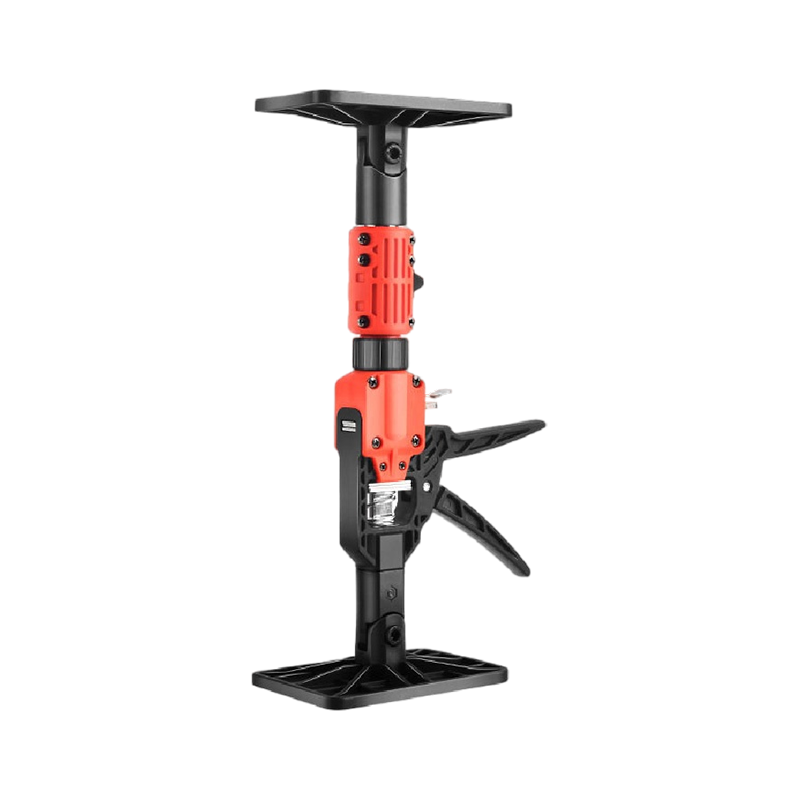
At the foundation of the labor saving arm jack's value proposition is its ability to temporarily support heavy components while workers position and secure them permanently. Traditional methods often required workers to hold materials in place with one hand while fastening with the other, creating unstable conditions and increasing fatigue. The labor saving arm jack eliminates this need by providing a stable platform that holds materials securely at the desired height and angle. This allows workers to use both hands for fastening and adjustment, improving both efficiency and quality of installation.
Adjustability represents a critical feature of effective labor saving arm jack designs. Job site conditions vary enormously, and tools must adapt to different situations. Quality labor saving arm jacks offer wide ranges of height adjustment to accommodate different ceiling heights and installation locations. Tilting and pivoting capabilities allow materials to be positioned at angles for stairwells, sloped ceilings, or other non-level installations. Extendable arms accommodate materials of different widths and lengths. This versatility ensures that a single labor saving arm jack can serve many purposes across different phases of a project.
Stability and safety features receive careful attention in labor saving arm jack engineering. Wide bases prevent tipping under load, while non-slip feet maintain position on varied surfaces. Locking mechanisms secure adjustments against accidental release, preventing sudden drops that could cause injury or damage. Some designs incorporate secondary safety catches that engage even if primary mechanisms fail, providing redundant protection. These features give workers confidence that the labor saving arm jack will perform reliably throughout the installation process.
Portability considerations influence labor saving arm jack design for construction applications where tools move constantly between locations. Lightweight materials reduce carrying burden while maintaining necessary strength. Collapsible designs pack into compact configurations for transport and storage. Carrying handles or straps facilitate movement around job sites. These portability features ensure that the benefits of the labor saving arm jack are available wherever needed without creating additional logistical burdens.
Specialized variations of the labor saving arm jack address specific trade requirements. Drywall lifts position ceiling panels accurately while supporting their weight during fastening. Pipe jacks hold plumbing and conduit at precise elevations during installation. Panel jacks support large sheets of sheathing or siding during exterior work. Each variation optimizes the basic labor saving arm jack concept for the particular demands of different materials and installation methods, providing targeted solutions for specific applications.
As the construction industry continues to focus on worker safety and productivity, tools like the labor saving arm jack will likely see increasing adoption. The dual benefits of reducing physical strain while improving installation efficiency align superbly with industry priorities. For contractors seeking to protect their workforce while maintaining competitive positioning, these devices represent a practical investment with measurable returns in both human and economic terms.